Alert: New WhatsApp Scam Uses Fake Attachments to Install Malware (July 2026)
July 8, 2026
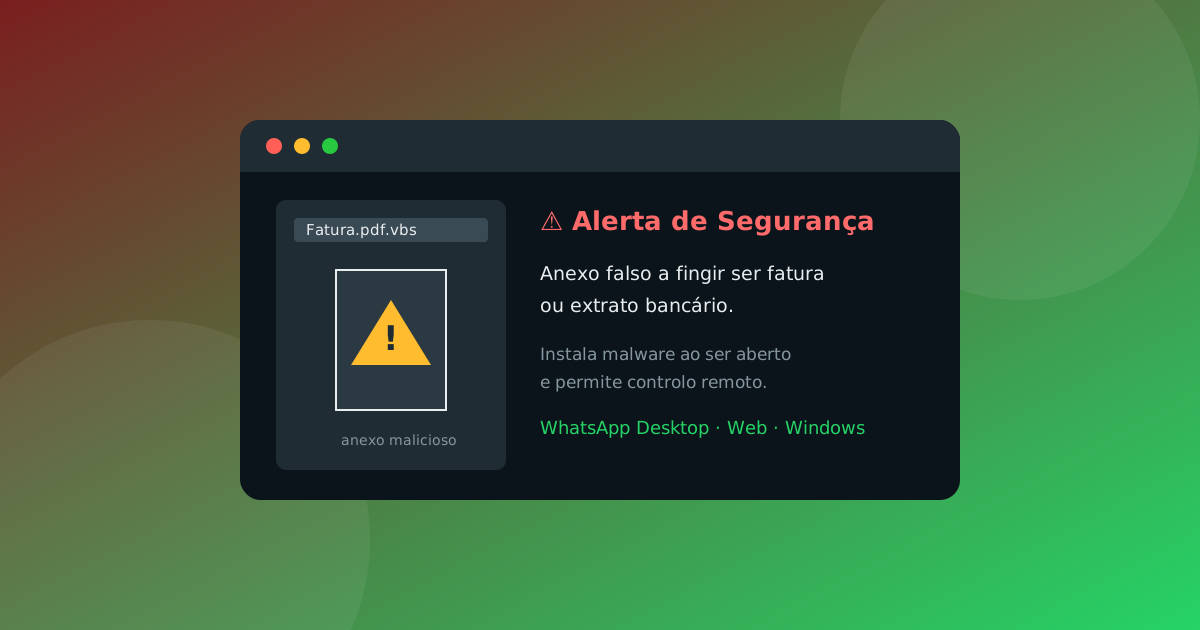
A new WhatsApp scam campaign is worrying cybersecurity experts. Attackers are sending fake attachments on WhatsApp that look like invoices, bank statements, or other important documents, but can install malware and grant remote control of the victim's computer.
If you use WhatsApp Desktop or WhatsApp Web, you should be especially careful.
How does the new WhatsApp scam work?
The attack starts when a cybercriminal compromises a legitimate WhatsApp account. From that account, they send messages to family, friends, or colleagues with files that look harmless.
The attachments may have names like:
- Invoice.pdf
- Invoice.vbs
- Bank Statement
- Payment Receipt
- Financial Document
The goal is to convince the victim to open the file. In many cases, the attachment installs malicious software that can give the attacker access to the computer.
What can happen?
If the file is executed, criminals can:
- Steal passwords.
- Access online accounts.
- Install more malware.
- Remotely control the computer.
- Steal personal and financial data.
Who is most at risk?
This campaign mainly affects users of:
- WhatsApp Desktop
- WhatsApp Web
- Windows computers
Experts indicate the campaign has already been detected in several countries and may continue to spread.
How to protect yourself
To avoid this WhatsApp scam:
- Never open unexpected attachments.
- Always confirm with the sender that they really sent the file.
- Keep WhatsApp and Windows updated.
- Use up-to-date antivirus software.
- Be suspicious of files with extensions like
.vbs,.exe,.bat, or.cmd.
Conclusion
WhatsApp scams keep evolving and becoming more convincing. Because the attacks use real contacts' accounts, it's easier to fool victims.
The best protection remains distrusting any unexpected attachment, even when it's sent by someone you know.
Frequently Asked Questions (FAQ)
Is there a new WhatsApp scam in July 2026? Yes. Cybersecurity experts have warned of a campaign that uses fake attachments to distribute malware.
Was WhatsApp hacked? No. The attack exploits compromised user accounts to send fraudulent messages.
Are Android and iPhone devices also at risk? The highest risk identified so far is for WhatsApp Desktop and WhatsApp Web users on Windows computers.
How can I avoid this scam? Don't open unexpected attachments, always confirm with the sender, and keep your devices updated.
💡 Ready to create your link? Use our free WhatsApp Link Generator to generate instant
wa.meURLs and custom QR codes, or read our complete guide on how to create a WhatsApp link.
Related
Got your WhatsApp link ready?
Create my link